

close
Choose Your Site
Global
Social Media
Views: 0 Author: Site Editor Publish Time: 2026-09-30 Origin: Site


Terminal throughput, environmental compliance, and operator safety depend entirely on the reliability of fluid transfer systems. A single mechanical failure halts operations instantly. High-stakes industrial environments require equipment built specifically for unforgiving conditions. Standardized catalog products rarely survive site-specific operational realities. Facilities battle extreme temperatures, aggressive chemicals, and high-volume marine or truck loading schedules daily. Generic solutions fail rapidly under these immense physical pressures. A mismatched transfer system introduces severe operational hazards to your site. This article provides an objective, engineering-first framework for evaluating a Loading Arm Manufacturer. You will learn how to verify structural integrity and ensure long-term regulatory compliance. It breaks down the critical metrics defining lifecycle reliability. We aim to equip procurement teams with the technical knowledge necessary for making informed, safety-driven purchasing decisions.
Vendor selection should prioritize internal engineering capabilities and proven metallurgical expertise over upfront unit cost.
The longevity of a loading arm is heavily dictated by swivel joint quality and rigorous Factory Acceptance Testing (FAT).
A verifiable track record of global safety compliance (API, ASME, ATEX) is non-negotiable for oil and petrochemical applications.
Lifecycle costs are significantly impacted by the manufacturer's after-sales service infrastructure and spare parts availability.
Treating fluid transfer equipment as a commoditized purchase drives operating expenses upward. Buyers often fixate heavily on the initial capital expenditure (CAPEX). They ignore the financial burden of future mechanical failures. Premature mechanical wear leads to catastrophic fluid spills. Toxic spills demand immediate emergency response protocols. They trigger severe regulatory fines and massive environmental cleanup costs. Terminal downtime destroys operational profitability instantly. Ships or trucks waiting at the dock incur steep demurrage charges. Every hour a loading bay sits idle translates directly to lost revenue.
You must adopt a long-term perspective during procurement. A reputable builder focuses strictly on long-term operating expenses (OPEX). They engineer robust systems requiring fewer maintenance interventions over decades of continuous use. Smart procurement balances upfront capital against lifetime operational stability. By reducing maintenance intervals, you protect terminal profitability. Operators who buy purely on price often pay exponentially more in unplanned repairs. A cheap component failing during a high-pressure transfer instantly negates any initial procurement savings.
Analyze historical maintenance data from similar terminal installations.
Calculate the hourly cost of terminal downtime for your specific facility.
Demand projected maintenance schedules from the vendor before signing contracts.
Weigh the financial risk of environmental fines against equipment upgrades.
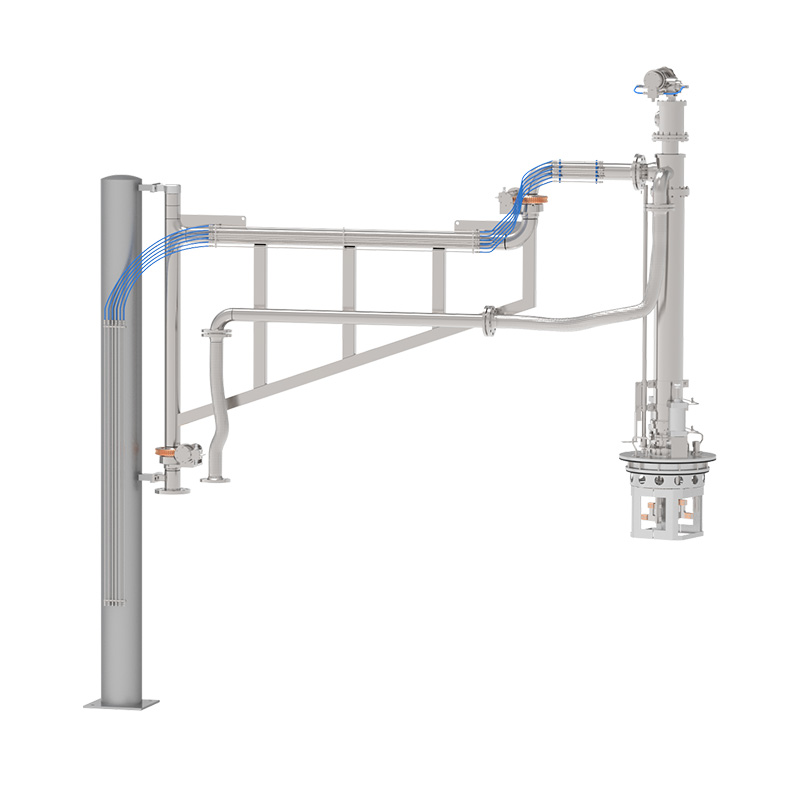
Terminals rarely fit a one-size-fits-all model. Spatial limitations dictate unique structural requirements. Simultaneous loading operations demand precise spatial envelopes. You must evaluate the vendor’s ability to design a custom loading arm tailored strictly to your site constraints. Generic designs simply fail in congested terminal bays. Look closely at their fluid and temperature expertise. Transferring cryogenic liquefied natural gas requires vastly different metallurgy than pumping highly corrosive petrochemicals. High-viscosity crude oil needs specialized jacketing and heating systems. A competent engineering team demonstrates a proven track record handling these challenging mediums. They understand how thermal expansion impacts rigid piping runs.
Modern smart terminals also demand advanced technology integration. You need to verify their capacity for seamless loading arm automation. This includes automated connection sequences and integrated emergency release systems (ERS). Remote monitoring sensors track joint stress and seal wear in real time. These automated safeguards prevent catastrophic decoupling during high-pressure transfers.
Feature Focus | Standard Catalog Models | Site-Specific Engineered Models |
|---|---|---|
Dimensional Fit | Requires facility modifications to accommodate | Designed to fit existing terminal envelopes |
Fluid Compatibility | Basic carbon or stainless steel options | Specialized alloys and custom seal polymers |
Thermal Management | Basic standard insulation | Custom tracing and dynamic jacketing |
Automation Level | Manual operation only | Fully integrated smart sensors and release systems |
Do not rely solely on glossy marketing brochures. You must look deeper when auditing a loading arm factory. High levels of heavy outsourcing indicate a dangerous lack of process control. Prioritize facilities showcasing extensive in-house machining capabilities. Direct control over raw materials ensures consistent structural integrity. When a builder controls their own lathes and CNC machines, dimensional tolerances remain incredibly tight.
The swivel joint acts as the primary failure point in any transfer system. It bears immense dynamic stress during operation. Therefore, swivel joint quality determines the overall lifespan of your equipment. Evaluate the hardening processes applied to the bearing raceways. Deep case hardening prevents premature wear under heavy torque. You also want highly accessible seal replacement designs. Maintenance teams should swap seals without dismantling the entire structural assembly. High load-bearing capacity under dynamic stress ensures the joint survives sudden fluid pressure spikes.
Testing and validation protocols separate elite builders from average assemblers. Mandatory quality control steps must include Non-Destructive Testing (NDT) on all critical pressure welds. This involves radiographic (X-ray) or ultrasonic inspections to detect hidden internal flaws. Hydrostatic testing proves pressure containment under extreme fluid loads. Factories typically test systems at one and a half times the maximum design pressure. Finally, demand rigorous Factory Acceptance Testing (FAT) before the unit ever leaves the production floor. The FAT must simulate your exact field conditions. It proves the mechanical balance and hydraulic integrity of the equipment while still in a controlled environment.
Terminal operational security and loading arm safety rely entirely on strict adherence to international engineering codes. Cutting corners on compliance introduces massive liability. A credible manufacturer holds specific certifications matching your precise application. Process piping must comply strictly with ASME B31.3 standards. This standard governs material selection and welding tolerances. Bottom loading configurations require adherence to API RP 1004 to ensure standardized truck connections. Hazardous, explosive environments dictate mandatory ATEX or IECEx electrical certifications. You must verify these ratings align with your specific classified terminal zones, such as Zone 1 or Zone 2. Marine applications fall under stringent OCIMF guidelines for structural integrity over water.
Ask the manufacturer for complete traceability documentation. Material Test Reports (MTRs) prove the origin and chemical composition of the raw steel. Documented Welding Procedure Specifications (WPS) ensure maximum joint integrity. Without these documents, you cannot verify the structural safety of the equipment.
Accepting expired certification documents during the bidding phase.
Failing to verify ATEX ratings for specific terminal zones.
Ignoring the origin of raw materials used in pressure-retaining components.
Skipping the review of welder qualification records (WPQ).
Even the best fluid transfer systems require routine maintenance. Wear parts degrade naturally over time. A vendor lacking robust support infrastructure introduces massive downtime risk. Consider the installation and commissioning phase first. Does the builder provide on-site supervision? Direct oversight ensures proper base plate alignment and structural balancing. They should also conduct operator training during commissioning. Untrained operators cause most accidental equipment damage.
Next, evaluate their strict commitment to after-sales service. Look for aggressive service level agreements (SLAs) for emergency support. Verify their average lead times for replacement seals and swivels. Manufacturers must provide comprehensive, site-specific maintenance manuals. Consider the geographical presence of their service technicians relative to your terminal location. Technicians located near your facility significantly reduce emergency response times. Delays in receiving spare parts paralyze transfer operations.
Service Category | Acceptable Target Response | High-Risk Indicator |
|---|---|---|
Emergency Technical Support | Under 4 hours | Over 24 hours |
Standard Spare Parts Dispatch | 24 to 48 hours | Over 1 week |
On-site Technician Deployment | Within 48 hours | Subject strictly to availability |
Custom Wear Parts Production | 2 to 4 weeks | Unspecified lead times |
Procurement teams need a structured approach when moving to the Request for Quotation (RFQ) stage. Start by executing rigorous reference checks. Ask your loading arm supplier for highly comparable case studies. You want to see successful installations handling the exact same fluid. Look for projects operating in similar climates with matching throughput volumes. Cold weather installations behave very differently than tropical deployments. Extreme cold requires specific elastomeric seals to prevent brittleness.
Assess their overall transparency during the bidding process. A trustworthy supplier clearly communicates realistic lead times. They actively challenge unrealistic technical specifications hidden in your RFQ. Engineering pushback indicates technical integrity rather than blind compliance. If a vendor simply says yes to every complex demand without asking clarifying questions, proceed with caution. They will also be completely transparent about their supply chain. You deserve to know exactly where they source critical sub-components. Emergency release valves, sensors, and hydraulic cylinders demand top-tier sourcing. Avoid suppliers hiding their component origins or relying entirely on unverified third-party machine shops.
Select your equipment manufacturer as a strategic partner rather than a transactional vendor. The reliability of your terminal depends entirely on their engineering integrity. Base your final procurement decision on manufacturing transparency, rigorous quality control evidence, and proven lifecycle support. Never award a contract based solely on the lowest initial bid.
Download a comprehensive vendor evaluation checklist.
Consult an independent engineering expert regarding your site constraints.
Request a detailed technical consultation for your specific terminal project.
Demand transparent case studies from all shortlisted vendors.
A: Realistic timelines usually span 12 to 24 weeks. This duration depends heavily on design complexity and material availability. Standard carbon steel models process faster. Highly engineered systems requiring specialized cryogenic alloys or integrated automation controls demand longer manufacturing cycles. Always build a buffer into your project schedule.
A: Focus strictly on empirical data. Ask the manufacturer for Mean Time Between Failures (MTBF) statistics. Request comprehensive cycle testing reports demonstrating long-term wear resistance. Review the metallurgy specifications, paying special attention to the depth and consistency of the bearing raceway hardening processes.
A: Yes, reputable builders offer on-site supervision. You must clarify the difference between basic equipment supply and turnkey installation services. Supervision ensures contractors follow correct base plate alignment and structural balancing procedures. It also provides an opportunity for critical hands-on operator training during final commissioning.
A: Manufacturers require detailed process parameters. You must provide the exact fluid type, design temperature, and maximum operating pressure. They also need peak flow rates, connection types, and the precise spatial envelope of your terminal bay. Missing data leads to inaccurate pricing and flawed engineering designs.


