

close
Choose Your Site
Global
Social Media
Views: 0 Author: Site Editor Publish Time: 2026-10-24 Origin: Site


I have stood on enough loading racks to know the sound of a flawless operation. The pumps hum, tanker trucks align perfectly, and fluid moves seamlessly from storage to transport. But then you spot it. A single, almost invisible fluid drip from a connection point. Within minutes, that minor weep can escalate into a hazardous chemical spill. Emergency alarms sound. The facility shuts down. Profits bleed away.
A secure fluid transfer setup is your frontline defense against these disasters. Maintaining the mechanical tightness of your equipment ensures absolute safety and stops expensive product waste. Tightness refers to the system's ability to hold a flawless seal under dynamic pressure. It prevents any liquid or volatile vapors from escaping into the atmosphere.
In this guide, we will break down the engineering principles and daily field tactics required to maintain an impenetrable seal. From matching elastomer materials to executing precise maintenance routines, you will learn exactly how to protect the operational integrity of your facility.
Key Takeaways
Swivel joints and seals are the absolute critical components for fluid containment.
Routine visual inspections and periodic hydrostatic testing prevent unexpected blowouts.
Proper operator handling ensures the equipment avoids undue mechanical stress during hatch connections.
Matching the correct seal material like PTFE or Viton to the specific chemical is non-negotiable.
Regular maintenance of the balancing cylinder prevents structural sagging, which slowly crushes joint seals.
A leak-free fluid transfer setup is not just an industry best practice. It is a strict survival requirement. The structural tightness of your equipment directly dictates facility safety, regulatory standing, and your bottom-line profit.
The primary function of any transfer system is the safe containment of fluids. Many of these liquids are highly volatile, corrosive, or toxic. A compromised seal introduces immediate fire risks, particularly in petrochemical applications where volatile organic compounds are constantly present. Beyond the fire hazard, operator exposure to toxic liquid drips poses severe occupational health risks. These incidents often lead to long-term medical liabilities and massive lawsuits.
Consequently, regulatory bodies enforce uncompromising guidelines regarding vapor containment and spill prevention. Failing to maintain perfect tightness on a loading arm skid can result in severe environmental contamination. The fallout from such an event typically includes heavy regulatory fines, complex legal battles, and mandatory operational shutdowns until the site is fully remediated.
From a purely financial perspective, tightness equals efficiency. While a major hose blowout is an obvious disaster, micro-leaks are insidious. They are frequently overlooked. A subtle leak of just one drop per second can quietly drain hundreds of gallons of valuable refined product over a fiscal year. When a system finally loses its containment capabilities entirely, it demands immediate intervention. Emergency repairs are exponentially more expensive than scheduled preventive maintenance. Ensuring strict tightness protects your initial capital investment and guarantees continuous throughput.
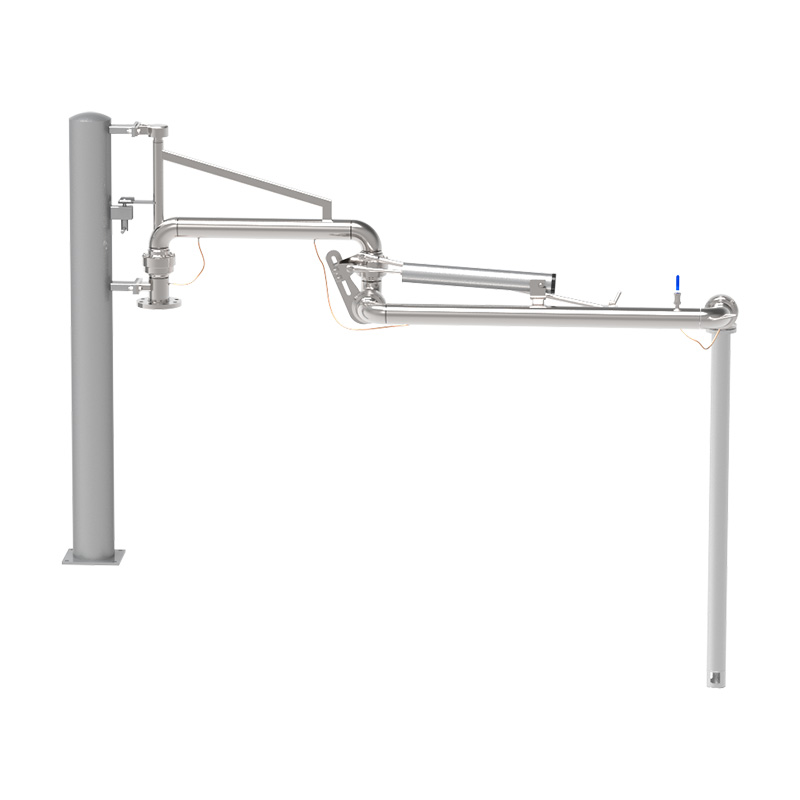
To effectively prevent leaks, engineers and terminal operators must thoroughly understand the anatomy of their equipment. The tightness of a truck loading arm relies on the precise, synchronized interaction of several mechanical components.
The swivel joint is the mechanical core. It allows the rigid piping to articulate smoothly while maintaining a highly pressurized seal. High-quality joints rely on precision-machined raceways and heavy-duty dual-raceway ball bearings. For instance, standard industrial models typically feature carbon steel or 304/316L stainless steel construction, engineered to handle design pressures ranging from 1.0 MPa to 2.5 MPa. These bearings bear the immense structural load of the piping and the dynamic weight of the rushing fluid. If the metal raceways wear unevenly, the entire joint will sag. This microscopic misalignment creates uneven compression on the internal seals and opens a pathway for fluid to escape.
While the heavy metal swivel joint provides the structural housing, actual containment is achieved through a network of primary seals, secondary O-rings, and flange gaskets. Primary seals block the main flow of liquid from bypassing the moving metal parts. Secondary O-rings act as a critical fail-safe to catch microscopic seepage. Flange gaskets positioned at static connection points must be torqued evenly during installation to prevent weeping under high pressure.
Furthermore, a frequently ignored factor in maintaining long-term seal integrity is the balancing mechanism. Whether utilizing a robust spring cylinder or a counterweight system, this component supports the heavy outboard weight of the pipes. If improperly calibrated, the dead weight of the metal pulls downward aggressively on the swivel joints. This continuous mechanical strain permanently distorts the internal O-rings.
Recent shifts in the petrochemical and fluid handling sectors show a rapid move toward predictive maintenance and stricter emission controls. Facilities are no longer waiting for a puddle to form on the concrete. Instead, modern high-throughput terminals are increasingly retrofitting their infrastructure with smart technologies.
Acoustic leak detectors and IoT-enabled pressure monitors are now being integrated directly into the piping structures. These sensors provide real-time data on joint integrity and pressure drops. This industry-wide evolution reflects a simple truth. Preventing a leak through automated digital oversight is significantly cheaper and more reliable than mitigating a chemical spill after the fact. As global environmental regulations tighten, relying solely on manual visual checks is rapidly becoming an outdated strategy.
Ensuring tightness begins long before the pump is turned on. Implementing strict standard operating procedures for pre-transfer checks is a proactive method for catching potential leak points early.
Operators must be trained to perform a systematic visual sweep prior to every single use. Key inspection points include looking for dark, damp residue around the split lines of the swivel joints. This is a classic early warning sign of a failing primary seal. Operators should also inspect flexible drop hoses for deep abrasions and verify that all bolted flange connections are straight and secure.
Proper alignment with the tanker hatch is equally vital. Operators must maneuver the equipment smoothly into place. Forcing or dragging the pipes past their natural resting alignment to reach a poorly parked truck applies severe lateral torque to the joints. This practice can instantly warp a seal and destroy system tightness.
Before ramping up to the maximum transfer rate, operators should verify the integrity of the control valves. A standard safe practice is to open the main supply valve just slightly. This introduces a low-pressure fluid flow into the empty pipes. Pause for ten seconds and observe the joints. If the system holds this initial pressure without any audible hissing or visible weeping, it is generally safe to proceed to full operational pressure.
Even a perfectly maintained system can blow a seal if operated recklessly. The physical dynamics of moving thousands of gallons of fluid require careful, deliberate handling.
One of the leading culprits behind blown seals is hydraulic shock, universally known as water hammer. This violent phenomenon occurs when a rapidly moving column of fluid is forced to stop instantly. Usually, this happens because an operator slammed a manual valve shut. The resulting kinetic energy creates a massive pressure spike that travels backward through the piping. It slams into the swivel joints with concussive force. This sudden surge easily exceeds the rated pressure limits of standard O-rings, causing them to rupture instantly. Flow rates should always be ramped up smoothly rather than initiated at full capacity.
Specifically, the physical manipulation of the equipment plays a major role in its longevity. Every articulating system has defined spatial limits. Pulling the equipment beyond its designed mechanical envelope causes the internal ball bearings to bind. This scores the metal raceways and permanently crushes the elastomer seals. Ensuring the tanker truck is parked in the exact designated loading zone is essential.
Proactive, aggressively scheduled maintenance is the only verifiable way to ensure long-term tightness. Waiting for a leak to appear before picking up a wrench is a high-risk strategy.
Friction is the ultimate enemy of containment. Without proper lubrication, metal grinds against metal. This generates heat and sheds abrasive shavings directly into the seal chamber. Regular lubrication is required to minimize this wear and to keep the elastomer materials supple. For high-volume terminals, greasing the joints every three to six months is standard. However, caution is required. Over-pressurizing the joint with a high-powered grease gun can actually blow the O-rings out of their seating from the inside.
Elastomer seals possess a finite lifespan. They will eventually degrade due to thermal expansion, chemical attack, and daily mechanical friction. You can often feel a faint vibration or notice increased stiffness when a joint begins to fail. When replacing these critical barriers, always use original equipment manufacturer rebuild kits. Cheap aftermarket seals often suffer from microscopic dimensional variances. Even a millimeter of difference can prevent a perfect fit.
To objectively verify the overall tightness of the entire assembly, periodic hydrostatic testing should be conducted during annual facility turnarounds. The apparatus is isolated, filled with water, and pressurized to 1.5 times its normal maximum allowable working pressure. If the pressure gauge remains perfectly steady for 30 minutes, the system is structurally sound.
For facility managers currently in the procurement phase, ensuring future tightness begins at the engineering level. A top loading arm built with incompatible materials will never remain tight. The chemical compatibility between the transferred product and the elastomer seal is the single most important factor in preventing leaks.
Standard industrial loading arms typically accommodate nominal diameters from DN50 to DN150. But the internal seals dictate the true operational capability. If an incompatible aggressive solvent touches a standard rubber seal, the material will rapidly swell, harden, or dissolve.
Seal Material | Temperature Range | Fluid Compatibility | Best Engineering Use Case |
|---|---|---|---|
Buna-N (Nitrile) | -30℃ to +100℃ | Water, general petroleum, diesel | Standard refined fuels and non-corrosive industrial water lines. |
Viton (FKM) | -20℃ to +200℃ | Aviation fuels, biodiesel, aromatics | High-temperature petrochemical applications and aggressive fuel blends. |
PTFE (Teflon) | -40℃ to +250℃ | Strong acids, pure solvents, corrosives | Chemical plants handling highly aggressive or high-purity volatile fluids. |
Despite the best preventive efforts, unexpected leaks can occasionally occur due to abnormal operational stresses. Accurate diagnosis prevents the unnecessary disassembly of healthy components. Operators should safely wipe the equipment down and observe where the fluid originates under low pressure.
Fluid weeping from the rotational split line of a swivel joint clearly indicates a failed dynamic seal or severely worn metal raceways. Conversely, fluid escaping from between two bolted pipe flanges usually points to a compressed or improperly torqued static gasket. Very rarely, a pinhole leak may appear on the rigid piping itself. This signals internal corrosion and requires immediate structural replacement.
If a leak is detected during an active transfer, safety protocols override all diagnostic efforts. Immediately halt the pump and close the primary supply valve. Safely drain residual product into a designated containment vessel. Finally, apply strict lockout protocols before any maintenance personnel approach the equipment with tools. Never attempt to tighten a leaking flange or joint while the system is actively holding pressure.
Maintaining a leak-free fluid transfer operation requires relentless attention to detail. It demands intelligent upfront engineering, rigorous daily maintenance, and a culture of careful operation. A perfectly tight system fundamentally protects your workforce, shields the surrounding environment, and secures profitability. If your current setup is suffering from recurring leaks, it is time to upgrade. Evaluate your facility's specific chemical requirements and choose a high-performance fluid transfer skid designed to handle your exact operational parameters securely.
The replacement frequency depends heavily on operational volume, environmental conditions, and the specific chemical aggressiveness of the fluid. As a general industry standard, proactive seal replacement is highly recommended every one to three years. Facilities handling highly corrosive acids or operating in extreme thermal conditions may require annual replacements to guarantee absolute tightness.
Leaks at the articulation points are primarily caused by the natural degradation of internal O-rings and primary dynamic seals. This breakdown typically results from chemical incompatibility, a lack of routine greasing, or mechanical misalignment. When operators over-extend the equipment beyond its working envelope, it places crushing, uneven stress on the joint housing.
Most standard industrial configurations are engineered to operate safely with a design pressure between 1.0 MPa and 2.5 MPa. However, the exact rating depends on the pipeline specifications, flange classes, and the type of fluid being transferred. Always consult the manufacturer's data sheet to ensure your pump output does not exceed the skid's maximum allowable working pressure.
Temperature fluctuations severely stress elastomer materials. Extreme cold can cause standard rubber seals to shrink, harden, and lose their elasticity, leading to immediate weeping. Conversely, excessive heat accelerates chemical degradation and material swelling. Selecting temperature-specific materials like PTFE is critical for harsh environments.
Yes, the vast majority of existing legacy systems can be easily retrofitted with upgraded seal materials. If a facility changes its operational parameters or begins handling a harsher chemical, standard Buna-N rubber seals can be swapped out for high-performance elastomers like PTFE or Viton. This targeted retrofit ensures the aging equipment maintains its tightness under more demanding parameters.


